How a Large Reinsurer Avoided $30M in Under-Reserved Liabilities using Lazarus AI’s Applied Intelligence Engine
Traditional sampling in reinsurance M&A is often a gamble. While the intent is to verify reserve accuracy, the reality is that sampling just 2-5% of a portfolio can miss rare-but-catastrophic claim patterns or systemic biases. On paper, a portfolio may look clean, while the true tail risk remains hidden in the unexamined 95%.
By partnering with Lazarus AI, a sophisticated reinsurer replaced manual sampling with leveraging Lazarus AI’s Applied Intelligence Engine and RikAI unstructured data understanding system, transforming their acquisition process from a best guess to a near-perfect price determination.
The reinsurer faced a classic M&A dilemma: short turnaround times on complex deals required expedited due diligence and portfolio review. Traditional methods rely on flawed processes filled with sample bias:
The risk was clear: one under-reserved claim missed during the sample could turn a profitable, winning opportunity into a massive loss event.
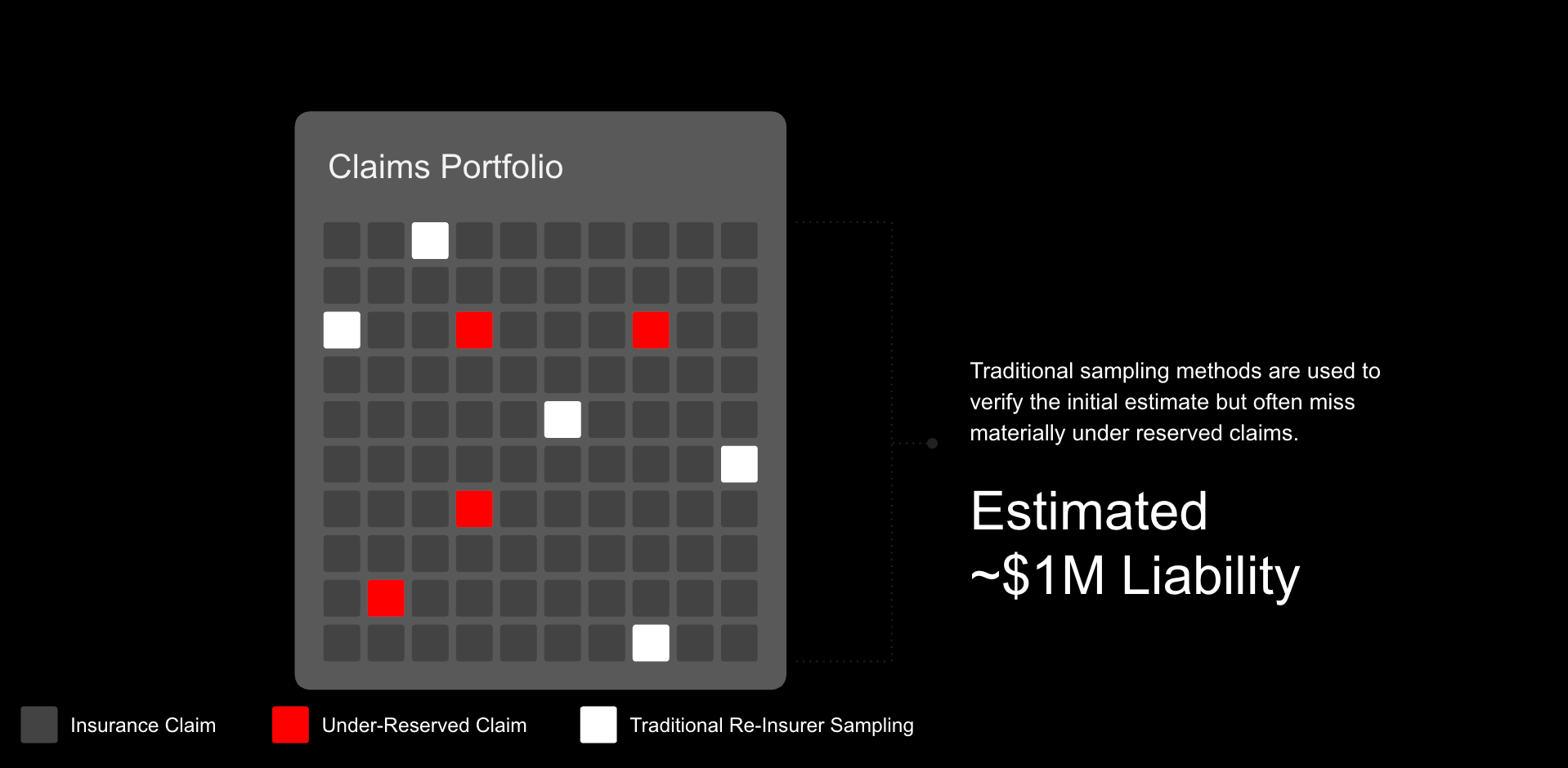
Lazarus AI’s Applied Intelligence Engine and its underlying RikAI toolkit was deployed to eliminate information asymmetry. Instead of guessing which files to audit, the engine performed an advanced review of 100% of the claims in the portfolio.
The technology didn't replace the analysts; it empowered them. By detecting the riskiest, most complex cases automatically, the system routed the 'danger zones' to a priority human-in-the-loop queue within the reinsurer’s claims system. This ensured that human expertise was focused exclusively where the liability risk was highest. In one instance, the engine flagged a note buried 100+ pages into a claim file; a single marginal reference to a possible common-law spouse completely flipped the reinsurer’s acquisition decision, preventing a million dollar miscalculation.
In another deal, the reinsurer ran the AIE against trucking claims profiles using a proprietary risk profile prompt technique that accurately predicted material loss development across over 10 claims that were not previously identified, leading the reinsurer to abandon the acquisition.
After reviewing loss runs produced in the months following the due diligence period and the final decision to abandon the opportunity, our customer identified approximately $30M in loss development across all claims.
None of this would have been possible without the ability to apply the intelligence of AI models at scale using infrastructure enabled by the Lazarus AIE.
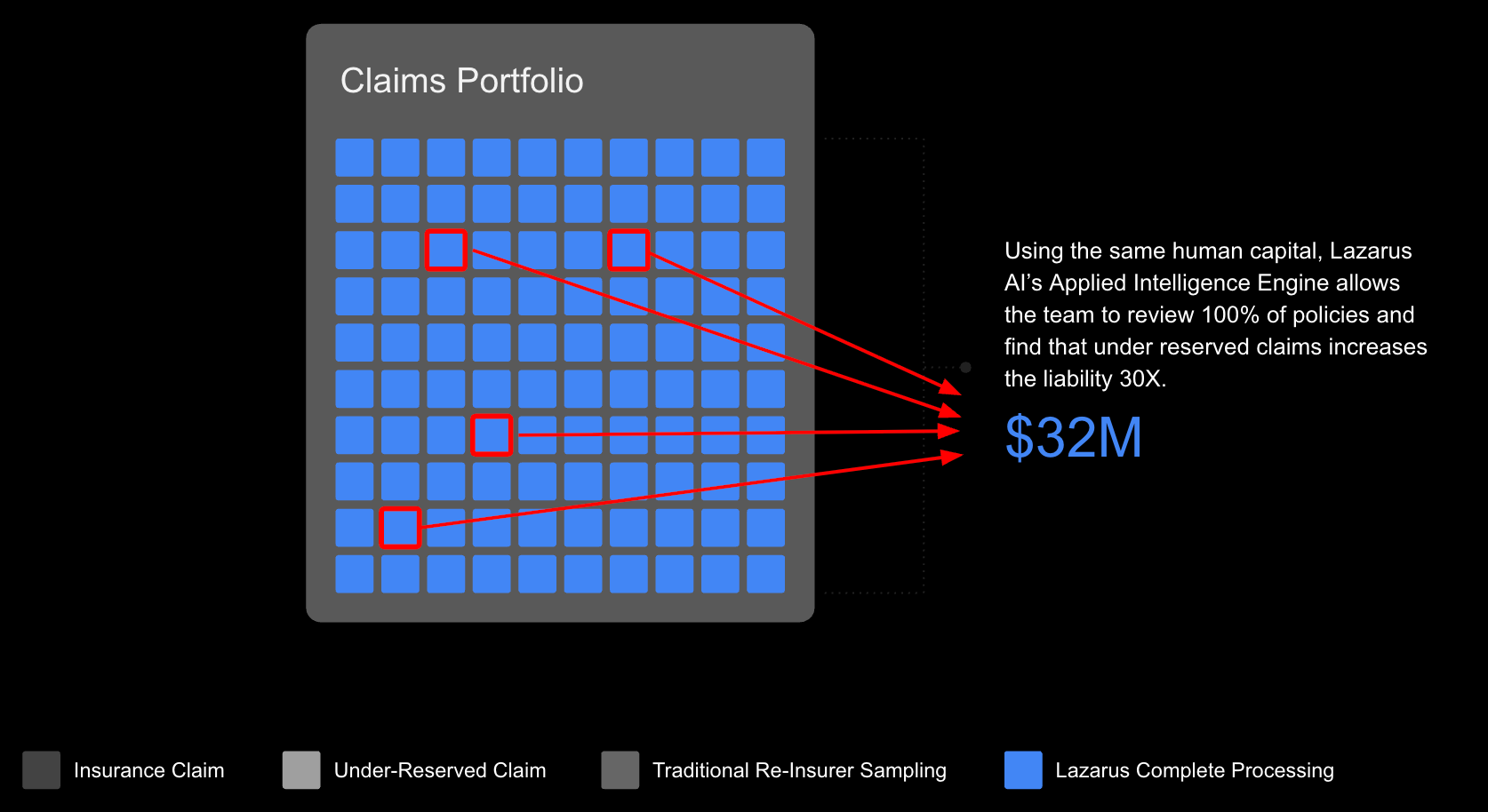
To achieve a 90X ROI, the reinsurer implemented a three-pillar AI strategy:
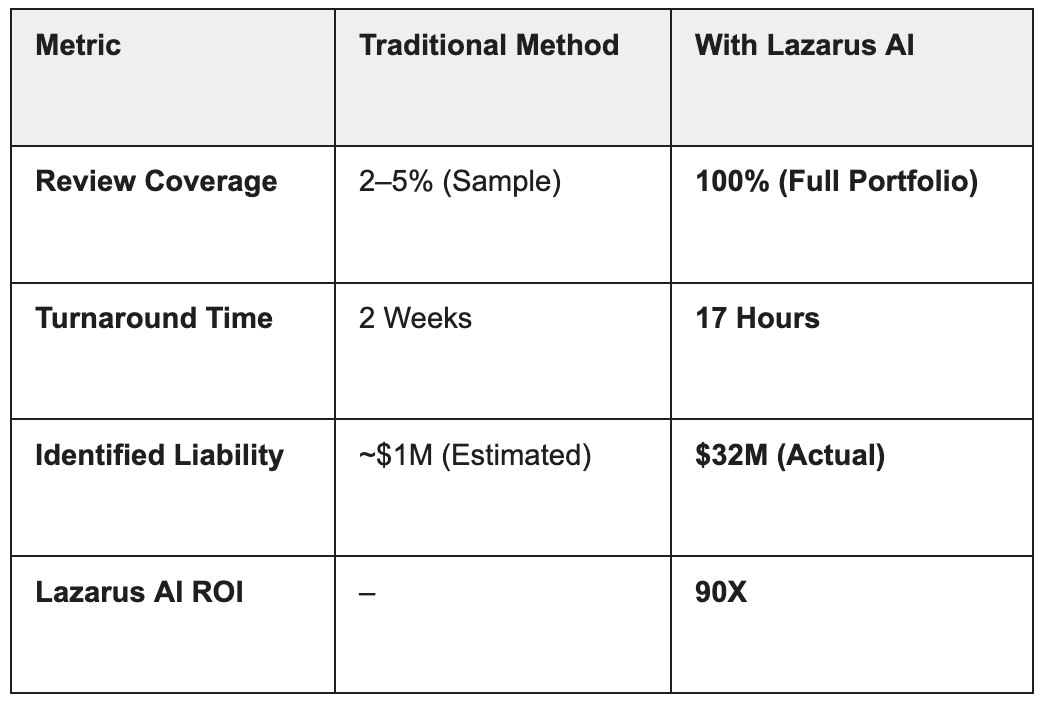
By eliminating the "sampling bias" that plagues the industry, the reinsurer now reaches near-perfect price determination. They move faster with current staffing levels, close more deals, and—most importantly—avoid the catastrophic tail risks that others miss.